About
Fallow & Blade Studio.
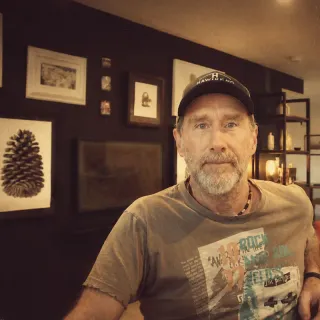
I founded Fallow & Blade Studio in 2026, after twenty years in and around technology: multimedia design at university, then trading systems and the tooling around them. Trading floors are an unforgiving school for design. When a screen is slow or unclear, it costs money in minutes, so you learn to build things that are fast, legible, and hard to break. This studio brings that discipline back to the design work I started with.
I keep the studio deliberately small. The person you speak with is the person who does the work: no account managers, no bait-and-switch, no templates dressed up as bespoke work.
Where the name comes from
Fallow & BladeThe name describes how I work.
Fallow is the considered side: the patience to plan properly, to think before building, to let an idea settle before it becomes code. Good websites are not rushed into existence.
Blade is the precise side: the cut of a well-made decision, the discipline of stripping a site back to what matters, the sharpness that makes a page load in under a second instead of five.
Slowly, then quickly. Considered, then exact.
What I believe
PrinciplesA website is a trust document.
Before anyone reads a word of your copy, your site has already told them whether you are serious, careful, and worth doing business with. In the largest study of how people judge websites, 2,684 people evaluated live sites and wrote freely about what made them credible. Visual design came up in 46.1 percent of those comments, more often than any other factor.
Speed is a design constraint, not a fix applied at the end.
The four-second rule you see quoted everywhere is not in any research I hold. What the research does show is that tolerance depends on what the page does while it waits: in one study a progress bar carrying no information beyond "working" roughly tripled how long people would wait. I build to under a second on a static site, where speed costs nothing to keep, so the question never arises.
Simplicity is the hardest thing to get right.
It is easy to add, and hard to leave out. Most websites fail because they try to do too much. I work with you to decide what the site is actually for, and then build that.
Security is not optional.
Every site is served encrypted over HTTPS, with hardened security settings, and with no database or server code to attack. The source is kept in version control, so there is always a clean copy to rebuild from.
A site needs looking after.
A website is working infrastructure, not a one-off purchase. Software ages, patches arrive weekly, and small problems become large ones if no one is watching. I host and maintain every site I build, by default. It is the only way to honestly stand behind the work.
Honest about fit
Who it’s forI work best with established businesses, professional service firms, individual tradespeople, and academics or professionals who need a serious personal site.
I am probably not the right fit for the cheapest possible build, or for a project that needs an in-house team of twelve. If I am not the right studio for you, I will say so, and point you toward someone who is.